
UNESCO World Heritage in the Netherlands
Twelve European properties, with places to begin a visit
Twelve World Heritage properties have territory in the European Netherlands. They include urban canals, industrial buildings, reclaimed land, a Roman frontier and the Wadden Sea. Several are extensive landscapes or cross borders, so one listing rarely means one entrance.
On this page
Cities, canals and modern design
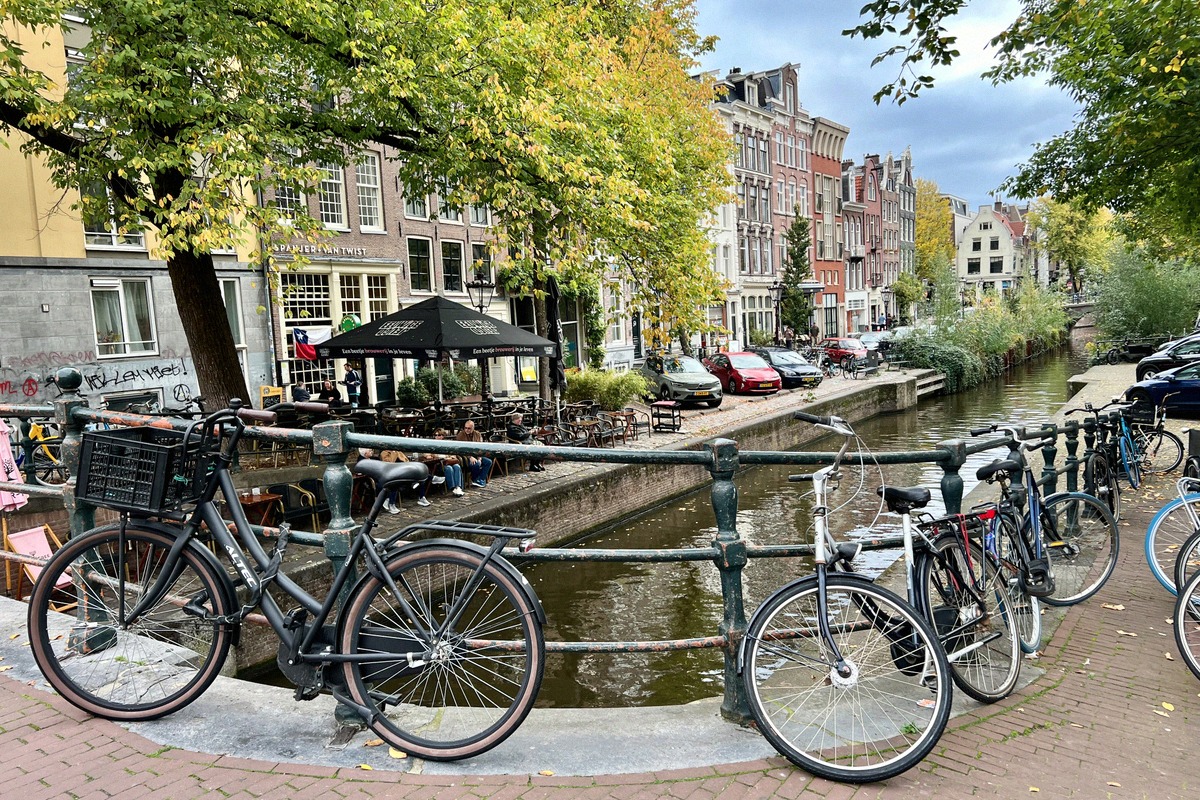
Amsterdam's seventeenth-century canal ring is an urban landscape. A walk along Herengracht, Keizersgracht and Prinsengracht introduces its shape without an admission ticket for the streets. Museums, canal houses and cruises are separate visits. Amsterdam works as a base for seeing the canals at different times of day.
Rietveld Schröder House in Utrecht is a much more tightly controlled interior visit. At Prins Hendriklaan 50, it requires a reservation rather than an unplanned arrival. It offers a different side of Utrecht from the medieval centre.
Van Nellefabriek in Rotterdam is a former coffee, tea and tobacco factory whose glass and steel façades express the ideals of modern industrial design. The visitor route is a guided tour through Urban Guides or the Chabot Museum, with the factory at Van Nelleweg 1. It is not a general museum that can be entered at any time.
Water, mills and reclaimed land
Kinderdijk-Elshout preserves 19 mills within their drainage landscape. Public paths and ticketed museum mills are different parts of the visit. The visitor centre at Nederwaard 1b is the practical start; the Kinderdijk guide explains the boat connections from Rotterdam.
Beemster Polder is the geometrically planned land reclaimed in 1612. Its roads, waterways and fields are the monument. The visitor centre at Middenweg 185 in Middenbeemster gives a specific starting point before a walk or cycle ride through the polder.
D.F. Wouda Steam Pumping Station near Lemmer has a visitor centre at Gemaalweg 1. A visit continues with a guided tour of the pumping station. Steam-operation days are a special event, distinct from ordinary access; seeing the building does not mean the machines will be running.
Schokland and Surroundings is a former island now surrounded by the reclaimed Noordoostpolder. Museum Schokland at Middelbuurt 3 provides an introduction before exploring the former island landscape. The experience is about the outline and traces of settlement on dry land, rather than arriving at a present-day island harbour.
Forts and the use of water for defence
Dutch Water Defence Lines combines the Defence Line of Amsterdam and the New Dutch Waterline as one World Heritage property. Inundation made land difficult to cross while remaining too shallow for boats. Forts, sluices and the intervening landscape belong together.
The Waterlinie Museum at Fort Vechten, Achterdijk 12 near Bunnik, is a concrete introduction close to Utrecht. Another possibility is the fort island Pampus, reached by its own boat from Muiden. Each fort has its own opening and access arrangements; the UNESCO designation is not a single pass.
The Wadden Sea
The Wadden Sea is the natural property on this list, shared with Germany and Denmark. Tides expose and cover a changing landscape. The five inhabited Dutch islands offer different approaches, including Texel from Den Helder and Schiermonnikoog from Lauwersoog. A guided mudflat excursion is another way to experience it; an improvised walk across the tidal flats is unsuitable.
Roman frontiers, colonies and a planetarium
Frontiers of the Roman Empire - The Lower German Limes runs through the Netherlands and Germany. Much survives underground. Museum Hoge Woerd at Hoge Woerdplein 1 in De Meern offers a visitor introduction; Fort Vechten and Park Matilo illustrate how archaeological remains can be marked in the modern landscape. Those places are components and interpretation points, not additional UNESCO listings.
Colonies of Benevolence records an agricultural scheme intended to tackle poverty through labour, schooling and housing. Museum De Proefkolonie at Majoor van Swietenlaan 1a in Frederiksoord introduces the settlers' story, with walking and cycling routes into the surviving colony landscape. Veenhuizen provides another Dutch approach through the National Prison Museum.
Eisinga Planetarium in Franeker is a working astronomical model built into a historic house. The visitor address is Eise Eisingastraat 3; entry requires a pre-booked ticket. This is a reserved indoor visit, unlike a walk through an open polder.
Combining visits
Amsterdam, Utrecht and Rotterdam make a connected first journey, with Kinderdijk as an excursion. The five-day train example leaves time for those cities. Northern destinations such as Franeker, Lemmer and the islands need their own travel time.
The Kingdom's thirteenth property is historic Willemstad in Curaçao, outside this European itinerary. Serial and cross-border properties count once here, even when they contain several Dutch places.